Timber pergolas in Teesside
A timber pergola in Teesside costs £1,500 to £4,500 installed in 2026. Pressure-treated softwood is the budget-friendly workhorse, oak the premium choice, and both suit the older brick properties and planted gardens where a metal structure would look out of place.
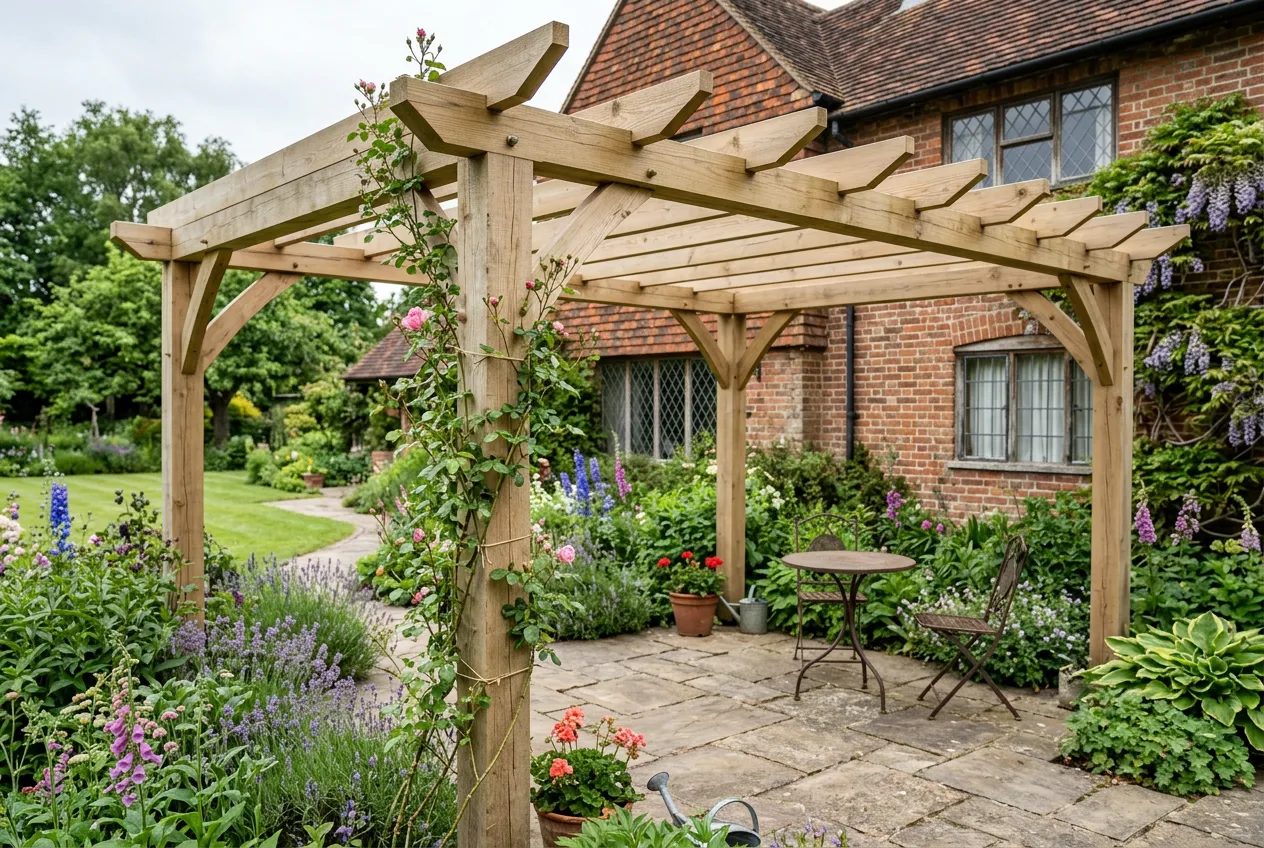
The original pergola, still the right answer for some gardens
Timber built every pergola on Teesside until the aluminium systems arrived, and it remains the better answer in plenty of places. Against the older brick of a Yarm townhouse or a Guisborough cottage, in a garden built around planting, a stained timber frame with a climbing rose over it sits naturally in a way anthracite aluminium never will. Timber also buys more size for the money: the budget that gets a 3 by 3 aluminium structure gets a 4 by 4 timber one.
What the price covers
- The timber: pressure-treated softwood posts and beams, typically 125 by 125 millimetres or larger at the posts, or air-dried oak at the premium end.
- The joinery: half-lap or housed joints properly cut and bolted, because a pergola held together with screws through thin plates racks out of square within a couple of winters.
- Footings: concrete pads with post shoes that hold the timber clear of the ground, since end grain sitting in damp soil is where rot starts.
- The finish: a named stain or oil, applied to all faces including the cuts, not just the visible sides.
- The roof detail: open rafters for planting, or a sheet or louvred canopy added where shelter matters.
Softwood or oak
Pressure-treated softwood is the sensible default: treated against rot, stable enough in section, and roughly a third of the price of oak. It will silver off if left unfinished, which some gardens wear well. Oak is the heirloom option, heavier, harder and longer-lived, with a tannin-rich grain that weathers to a silver grey, and it suits period properties and bigger budgets. Green oak moves as it dries, which is character rather than defect, but it means the joints have to be cut with that movement in mind.
The maintenance, stated honestly
Timber asks for a little attention and repays it. A softwood pergola wants a fresh coat of stain or oil every two to three years, an eye on the base of the posts, and the climbing plants kept from tearing the joints apart as they thicken. That is an afternoon's work a year, and in return the structure lasts twenty years and improves with age. If the honest answer is that the maintenance will never happen, aluminium is the kinder choice, and the comparison guide says so plainly.
Built to the garden, not the catalogue
Timber's quiet advantage is that it is made, not unboxed. Post heights adjust to a sloping garden, beams extend to span an awkward corner, and the rafter ends can be cut to a profile that suits the house. On the walled yards of Middlesbrough and Hartlepool, where nothing is square and every boundary is different, a made-to-measure timber frame often fits the space better than any kit.