Aluminium pergolas in Teesside
An aluminium pergola in Teesside costs £2,500 to £6,000 supplied and installed in 2026, depending on size, roof type and specification. Powder-coated aluminium needs no painting, never rots and, in a properly specified frame, handles the coastal wind that ends lesser structures.
Why aluminium took over
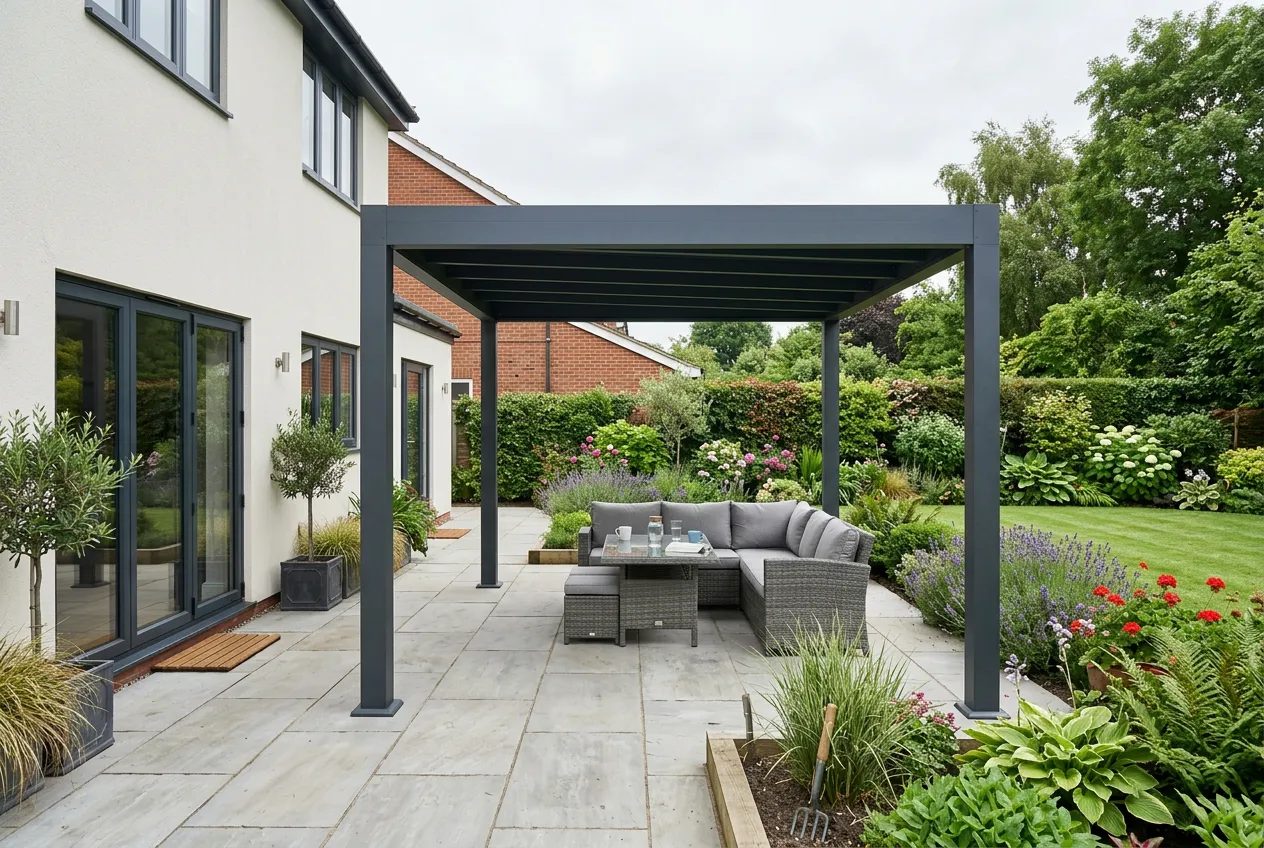
Ten years ago a pergola on Teesside was a timber frame with a climbing plant. Now the standard request is powder-coated aluminium, and the reason is upkeep. Aluminium never needs painting, does not rot at the base of the posts, does not warp out of square, and in anthracite grey it matches the window frames and bi-fold doors on the houses it sits against. For a household that wants the structure fitted and then forgotten about, it is the obvious material.
What the price covers
- The frame: posts typically 100 by 100 millimetres or larger in a stated wall thickness, with beams sized for the span. This is where cheap kits save money, and where the wind finds them out.
- The roof: a fixed polycarbonate or solid sheet roof at the lower end, or rotating louvred blades at the upper end, with the gutter detail included either way.
- The finish: powder coating in a named colour, anthracite grey being the default on most Teesside jobs.
- The base detail: bolt-down plates onto concrete pads or an engineered fixing to a sound existing patio, stated in writing.
- Installation and make-good: assembly, alignment, sealing where the structure meets the house, and the packaging removed.
Reading a specification, not just a price
Two aluminium pergolas at the same footprint can differ by a factor of two in the metal. The lines that matter are post size and wall thickness, the tested wind rating, and how the roof is held down. A frame rated to 100 kilometres per hour or more belongs on an exposed garden at Redcar or Saltburn; an unrated import kit does not, whatever the saving. Ask for the figures and a good quote will already have them on the page.
Where aluminium earns its price
It is the right answer on exposed coastal plots where salt air attacks both timber and cheap steel, on busy households that will never restain a frame, and anywhere the pergola is expected to look crisp for a decade with no attention. It is less obviously right against a soft brick cottage garden where painted timber sits more naturally, and on tight budgets where a well-built timber structure delivers more size for the money. The comparison guide sets both sides out.
The installation is the risk, not the material
Aluminium systems arrive as engineered kits, and they fail at the fixings rather than in the frame. Legs clipped to patio slabs rather than fixed to concrete, wall brackets into the wrong part of the masonry, and louvres left uncalibrated so they weep at the joints: all invisible on day one, all expensive by the first winter. A quote that names the base detail and the fixing method is a quote from someone who has installed the system before.